Monday, June 20, 2011

The Edge of Documentary

Richard Billingham-

-British Photographer that photographed his alcoholic father, large mother and unruly brother 1990-1996.

-On one hand his work as read as a political documentary targeted to the upper middle class and addresses the working class poverty of the 1990's.

-On the other hand with the 1990's witnessing a rapid expansion of reality television culture, was interpreted as an entertaining drama.

-Billingham would exploit is family for is career.

-"After I did the family pictures , I soon realised that people like the family pictures for reason that I never intended ... there are very few people, I think, that get beyond the subject matter and can identify the artists intention... they just like to look at my mum's tattoos or the stains on the wall paper or the dirty floor" Richard Billingham.

-If the viewer sees poverty in his images they are not reading the images the way he intended, he wants boredom and addiction to be seen.

-The reason I like these images if because Billingham doesn't care if his family is going to be judged because of the photographs, he just wants to show what a day in a life in his family is like even if his family or the images aren't perfect.

Philip Lorca Dicorcia-
-Uses hidden lighting.

-Initially he photographed close friends and family members in low key intimate situations, looked real but strangely lightened.

-Mood or atmosphere is important in all of his images.

-Hustlers series, posed real life rent boys in locations he had chosen. Images looked oddly innocent and day dreamy, they make you wonder about identity. The illusion of innocence was contradicted by his decisions to include in the title captions the amount he had paid them for their time.

-His Polaroids are not as dramatically powerful or intellectually challenging as his bigger works, but they cast light on his intensely cerebral decision making and the instinctive ebb and his flow of his art. And, as artifacts, they possess a singular beauty in and of themselves.

-I like his work as when seeing an image you are questioning weather it is staged or reality.

Weegee-


-Photographer and photojournalist known for this Black and White street photography.

-Was a press photographer in New York City in the 30's and 40's.

-He developed his signature style by following the city emergency services and documenting their activity.

-Main themes were life, crime, injury and death.

-Some pictures were staged some were reality.

-He was a self taught photographer and developed his photographs in his homemade dark room in the back of his car.

-Naked City 1945 was his first book of photography.

-Reason I like his work is also because you are left guessing weather it is staged or not, also the black and white I feel makes the images more emotional especially when they are of injured or dead people.

Other Artist Models-

Robert Frank-

Dorothea Lange-

Friday, May 27, 2011

Final 6 Images


Ideas & Selecting Images

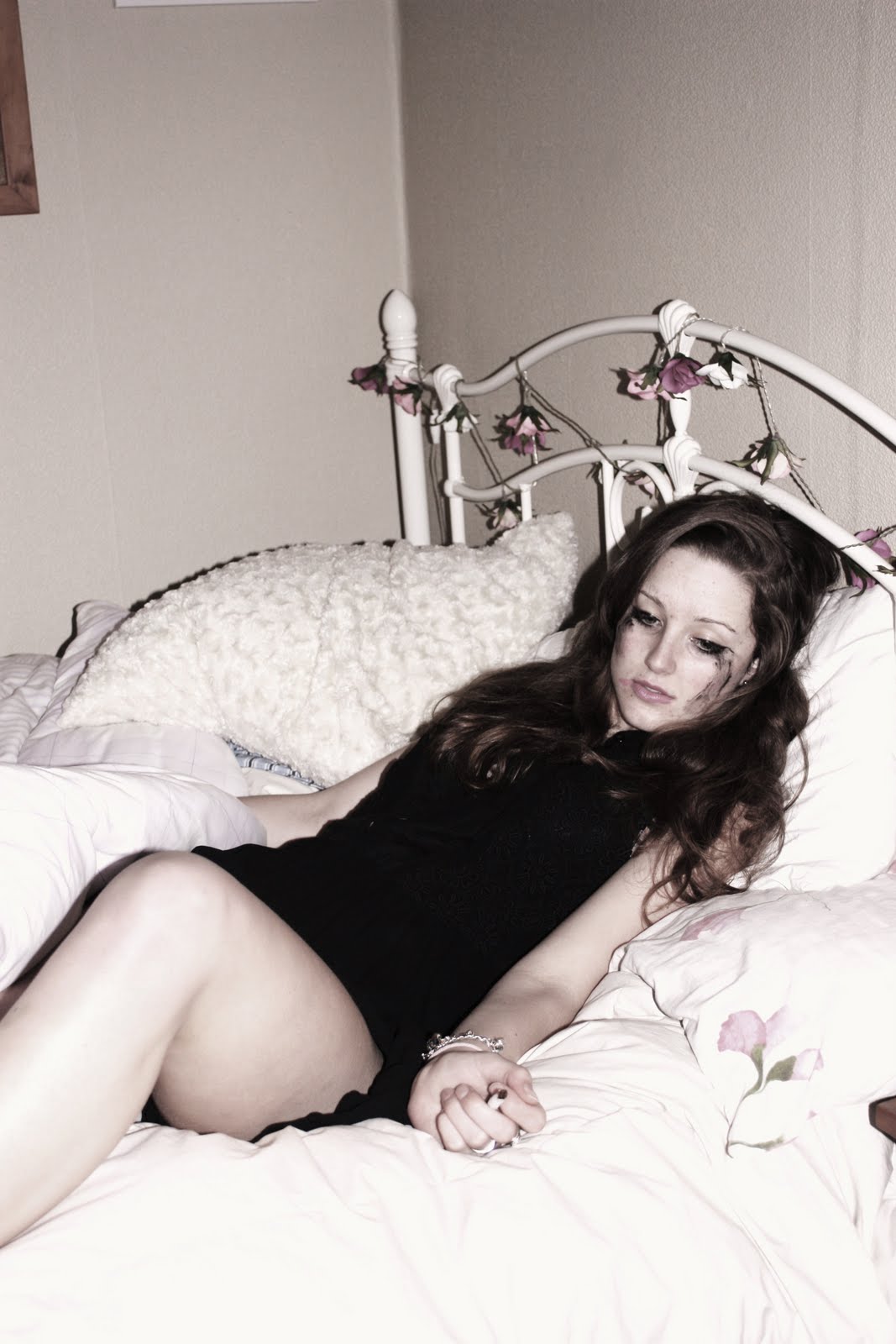
After doing my photo shoot I realised the images were no longer of 'A day in the life of a student' they were more like of an everyday teenager being hungover which is what New Zealands drinking culture has turned into. I then had to select the images I thought conveyed that message the best. I came up with 6 final images. The first three images showing the hungover girl in bed in her dress from the night before, make up still on and bottles next to her bed. The other three images of her spending all day being bored and doing nothing. There are some black and white images and some colour also all of the images are portrait apart from one which is landscape, having the images different like that some how for me conveys the feeling of being hungover as you usually feel confused and disorientated and when seeing these images you wonder why they are not the same therefore conveying these feelings.

Tuesday, May 24, 2011

Photo Shoot #2


What is Narrative Photography?

Narrative Photography narrates a story, event or situation using a photograph rather than words. The viewer reads the image as the photographer portrays it. In telling visual stories about the world, photography is narrating the world.

Proposal

Introduction-

For this project I aim to produce a series of photographs that show a narrative. The narrative I want to show is a day in the life of a student, narrative will be my main genre. I will borrow the styles of fashion and documentary photography for these photos. I aim to have a final product of around 3-5 images.

Influences-

Present day is one of the biggest influences for this project as my aim is to make the photos show a day in the life of a student in2011. The artist models I will look at are Annie Leibovitz because of her ability to make a picture say 1000 words. Tracey Emin, the amount of detail and her bedroom scene images influence my work. Nan Goldin, photos of everyday people and their everyday situations appeals to me a lot, the realness of them makes them very strong photos to me and I want my work to make the viewers feel that same way. And Gregory Crewdsons attention to detail and amazing composition appeals to me.

References-

-Annie Leibovitz, Life Through A Lens, 2008.

-Art Photography Now, Susan Bright.

-www.artnet.com

-www.aperture.com

Practical Considerations-

I am planning on having 3-5 final images and want to mount them on to black card. I need several appropriate bedrooms and models that can be available when needed.

Proposed Budget-

Depending on how many images I have will influence the size of them.

5xA3= $35

Timeline-

Week 12- Continue research, book models, lighting tests for each location, final photo shoots.

Week 13- Choose photos, edit and print them and hang them.

Week 14- Present!

Wednesday, May 11, 2011

Animating Identity First Photo Shoot

Identity-
An entity can only be fully identical with itself, any difference gives rise to a separate identity. Thus identity is whatever makes an entity definable and recognisable, in terms of possessing a set of qualities or characteristics that distinguish it from other entities.

Emotions-
Emotions is the complex pshychophysiological experience of an individual's state of mind as interacting with biochemical and enviromental influences.

Expressions-
A facial expression results from one or more motions or positions of the muscles of the face. These movements convey the emotional state of the individual to observers.